Aja Holston-Barber

I was part of HIP’s third Health Equity Awakened cohort! I hadn't heard of HIP, but a colleague had, and we both applied to the cohort. I was about two years into my public health role at the time — I'd come from youth organizing and political science — so I was trying to find my footing in public health. I'd been disappointed with the experience but really animated by the experiences I was having in governmental equity spaces.
I remember that HIP was known for health impact assessments also, so I felt like these were people who were thinking about public health in a way that I wanted to talk about. So, I was intrigued by the language of health equity at the national level and wanted to learn more. I especially appreciated that HIP had a tone that signaled community, transformation, big vision, and clear appreciation and expertise around systems of oppression as part of the field. I also remember them being very specific at the time about race and their goals around the cohort being a place for Black (and other POC, for sure) public health professionals.
My entire first cohort experience with HIP changed my life! Going to Oakland in May 2018, I was so inspired and changed by: 1) the centering of power as a central framework; 2) the head and heart combination that centers nervous system regulation (and appreciation for dysregulation) — the window of tolerance! I still use that to this day; 3) beginning the cohort experience with adrienne maree brown's Emergent Strategy which offered a really powerful framework for us; 4) the laying out of transformational vs. transactional strategy; 5) the Trojan mouse strategy — I don't remember exactly how this was framed, but it was the idea of planting powerful seeds.
Together, these frameworks dramatically changed my understanding of what we are actually fighting for. I had a strong sense of what I was angry about politically and what the problems were — but I had almost no language for what the vision was. This first cohort retreat (and the two that followed) clarified so much for me and gave me immense focus that still guides my work in organizing across Kentucky today.
I think HIP asserts a story in the field of public health that is really necessary to expand our imagination. They have been really consistent in lifting up leaders who are expanding the story as well — HIP has redefined the public health professional (in my mind) from a pretty milquetoast imagination of a neutral government employee to that of one who has a vision and strategically sets out to achieve it. HIP has created real moments to deepen the collective sense of where our field should go and done so in a way that is both head- and heart- centered. That's actually something I really remember about HIP, head and heart, which I found so supportive.
I hope we continue to be on the side of bold, big visioning for public health in the country. I hope we continue to take risks and get even more clear on what our transformational public health governance platform is. I also hope that we continue to lift up new leaders and invest in growing a leaderful health equity movement. I hope we stay connected to grassroots movements and be a strong contributor to the collective movement to transform this country. Maybe this also includes a more proactive strategy around governance, and putting leaders into strategic positions. But, in general, I hope we stay focused more on the value proposition of HIP over simply keeping the organization alive for the sake of organizational legacy.
I love HIP so much! HIP has so many people (including me) invested and committed to their success and that's because HIP deserves it. I've met some of the most brilliant public health professionals because of the HIP network and I am a better person for it. I know I'm not the only one. I'm so grateful for such a strong analysis that integrates the head and the heart in this work.
Ana Tellez

In the summer of 2016, I joined HIP as the first Communications Director for the organization. The hiring process as my first official touchpoint showed deep care and intentionality from the people working at HIP, and I was grateful that the team took a chance on me then as the first full-time non-researcher hire.
Up until that moment I had spent 10 years working in public health and was still searching for “my people” in the sector. I was yearning for an organizational home that practiced the social justice values I carried with me. What I found in HIP opened up a whole world for me beyond that — a connective tissue between the often-bureaucratic and intellectualized public health spaces I had inhabited, tethering to the heart of justice work: community organizing and social movements.
I am so honored now that the team took a chance on me that summer and that the people of HIP poured trust and love into the work — and into me — for the following six years.
There are so many moments where my way of making meaning in the world and how I walk through it shifted for me as a result of my time at HIP! This is a really hard question to answer.
The truth is that HIP’s theory of change and the way the team moves through the work is something I carry with me and lean on every day. There is an authentic and rigorous grappling with the tensions between the collective freedom we seek and the harmful power structures that we inhabit in our minds and in the world today. I experienced this as a through line, from the way internal processes were designed with and for staff, to how we showed adaptability in building trust between public health and community organizing partners, to how we supported health departments in navigating accountability and power sharing with their Black, Brown, Indigenous, queer, and poor constituents.
In public health, we say “everything points back to health!” — and HIP lives into that by bridging our public health analysis to the embodiment of our humanity.
From my own time at HIP, I understand that none of what is made possible is done alone, and that it can only happen through deep collaboration across an ecosystem of actors. And yet, I truly believe that HIP’s capacity building work with people who work in health departments across cities, counties, and states throughout the US is transformational for the field.
The multipronged approach HIP has taken over the years to support and help grow the kinds of public health leaders and decisions we need merits bigger recognition — from the early health impact assessment work that leveraged research in service of health equity outcomes to the leadership institute that is Health Equity Awakened that nourishes public health leaders, to being a bridge between government and community organizing groups so that accountability to communities is actionable. In the face of the growing inventory of harmful actions of our federal government today, these become bigger and more important actions of faith in our collective wellbeing.
Abundance! My hope is that HIP and its partners can receive the kind of major investments that can bring to life the deep subject matter expertise alive in the work and the people at the center of it. I hope that in 20 years, we are benefiting from the field’s investment in HIP’s theory of change writ large, and that many more people live longer, healthier, happier lives as a result of it.
Bianca Agustin
I was introduced to HIP during the Covid outbreak through the Athena Coalition and Warehouse Workers Resource Center, who partnered with HIP on a couple of research reports on warehouse safety and environmental impact, including “The Public Health Crisis Hidden in Amazon Warehouses.”
HIP’s research demonstrating the connections between higher wages and improved physical and mental health outcomes was a pivotal moment for me. It helped crystallize the link between economic justice and health equity.
HIP has helped shift the field from focusing primarily on individual behaviors and downstream outcomes to examining the upstream systems and actors that shape health. By naming the role of corporations and tracing how business practices influence economic security, workplace and living conditions, environmental exposures, and access to essential resources, HIP has helped bring greater accountability into public health conversations.
I hope for greater support for cross-issue campaigns that recognize the interconnected nature of economic, racial, gender, and environmental justice. Rather than operating in silos, these movements can reinforce one another, build broader coalitions, and create a more powerful force for systemic change in the face of today's political challenges.
Caroline Brunton

I met HIP early on in my tenure at the W.K. Kellogg Foundation (WKKF). We were wrapping up a project called Healthy Heartlands, where HIP was working with the network partners to bring a public health lens to family-centered policy campaigns in the Midwest. As I dug into the work with Healthy Heartlands, I started to get a sense of how HIP used the tools and skills of public health to make a difference in broader social movement spaces, and the care with which they built relationships. It was then that I realized I needed to know more about their entire theory of change. It was clear that HIP was special.
Having worked in public health for my entire career, I have always been acutely aware of its limitations as a field. But seeing how HIP and its partners have been able to use the tools of the field to ally themselves with social movements has really shifted my perspective on public health from a deficit model to an asset model. In particular, the work that HIP did around the health and safety impacts on rideshare drivers really shifted my perspective about what public health can and should add to these important conversations.
HIP has been instrumental in pushing the conversation about the role that public health professionals can play in advocacy. They, along with their partners, have collectively shifted the narrative about public health as a political field. For years, so many of us have been told to be apolitical. HIP has helped flip that notion. Now, more people know that public health is inherently political, but it doesn't have to be partisan.
I hope that HIP and partners can continue to push the boundaries of the imagination on what public health can and should be, and how it should be showing up for our communities. I hope they continue to show us all that other realities are possible.
David Liners

I believe I heard about HIP first from Doran Schrantz of ISAIAH in Minnesota. Between her and some friends at the University of Wisconsin, I learned about the whole concept of Health Impact Assessments and social determinants of health. A colleague and I met with Jonathan Heller and Lili Farhang to talk about our work in criminal legal system reform, specifically in promoting state funding for treatment alternatives to incarceration and how that might be an area that would intersect with HIP's expertise and interest.
Together, with HIP staff Kim Gilhuly as our main partner, we got funding and worked together on a major report, which helped secure significant funding from a Republican state legislature for alternatives that keep people out of jail and prison, and instead gets them into Alcohol & Other Drug Abuse services and mental health treatment programs.
WISDOM (the organization I worked in) and HIP had multiple significant collaborations. In brief, we found that when we could get decision-makers to see smart criminal legal system reform through a public health lens, they were much more willing to look at the kinds of changes we wanted. It provided a way out of "fear of crime" frames that stymied change for so long. Our organization could be written off as soft-hearted idealists and people with criminal histories, until we started showing up with more facts and figures and science and in the company of people who clearly understood those things.
HIP helped us (at least for a while) to shift the frame from punishment/revenge to one of health/restoration. There are some ways in which COVID and Trumpism have led to a big setback in the level of respect for public health professionals and truth — which has made this work more of a challenge.
HIP was hugely influential in the movement to see incarceration as a public health issue that affects not just justice-impacted people but the entire community.
HIP's core strength is its ability to bring impacted people together, as peers, with people who are good with data and science. HIP is terrific at being reliable and factual, whether or not the data is completely convenient. And HIP is very good at hearing and respecting the experiences and the perspectives of the people most impacted by the policies they are looking at. HIP's presence and collaboration is a tremendous multiplier of the power of community organizing. I hope HIP will continue to hold together the worlds of rigorous research and analysis and of grassroots organizing — being faithful to both.
Dawn Phillips
I came into relationship with HIP through my organizing work in Oakland and the Bay Area. At the time, I was working with Causa Justa :: Just Cause, where we were organizing at the intersection of housing justice and immigrant rights. As we worked to address the impacts of gentrification and displacement on working-class Black and Latino communities, we increasingly saw how deeply those issues were connected to health and community well-being.
We began partnering with public health allies to strengthen our organizing and campaign work through a social determinants of health framework, and HIP was one of the key organizations we worked with. When I later transitioned to national work with Right to the City Alliance, that partnership continued and deepened. Over the years, HIP became one of Right to the City's core strategic partners in the public health sector, supporting research, resource development, campaigns, and many of our member organizations across the country.
Serving on the HIP Board was one of the most meaningful experiences for me. It gave me a much deeper understanding of governmental public health and the role it can play in advancing health equity and justice. Before joining the Board, I did not fully appreciate the scope of governmental public health or the importance of transforming those institutions.
The experience also connected me with leaders across organizing, philanthropy, faith communities, research, and policy. It helped me better understand how the work I come from fits into a broader movement ecosystem and how different sectors can work together to advance health equity. The Board was a joyful and inspiring space, but it was also a profound learning experience that expanded my understanding of how we build power and create change.
One of HIP's most important contributions has been demonstrating how a national organization can genuinely support local community-based organizations. Too often, relationships between national intermediaries and local organizations are transactional and primarily benefit the national organization.
HIP has modeled a different approach. Over the years, it has provided meaningful research, policy, and campaign support to community organizations across the country in ways that are principled, responsive, and accountable. Again and again, I've heard local leaders describe their work with HIP as collaborative, respectful, and genuinely useful.
Whether helping communities document the health impacts of displacement, strengthen arguments for rent control or social housing, or develop local health impact reports, HIP has shown what real partnership can look like. It has built trust and demonstrated that national organizations can use their resources and expertise in service of community-led change.
After 20 years of inspiring and impactful work, we find ourselves in a moment when many of the advances HIP has fought for are being actively challenged. There is an ongoing assault on the idea of public health, on the role of government in promoting health and well-being, and on public trust in our institutions and one another.
Because of that, HIP's work is more necessary than ever. The next 20 years will require rebuilding from the political and social damage we are experiencing today. HIP will play a critical role in helping protect and strengthen governmental public health, ensuring that public health institutions remain effective, well-resourced, and trusted.
The work ahead is not only about defending what exists, but about realizing the full potential of public health. Protecting, rebuilding, and advancing that vision will require sustained organizing, leadership, and partnership — and organizations like HIP will be essential to that effort.
Jonathan Heller

I had been working in the biotech industry for nine years. I was fed up with its focus on profiting off of illness and realized that I wanted to be working on preventing disease — that disease prevention was why I originally became interested in a career in health. That’s when I became more aware of public health as a field.
As I networked with folks in public health and related fields, asking who was doing innovative work, a number of people pointed me to the Health Impact Assessment work Rajiv Bhatia was doing at the San Francisco Health Department. When Rajiv showed me examples of the work they were doing, I knew I’d found what I was looking for — a way to apply my scientific background to improving health. Rajiv was interested in doing HIA work outside of San Francisco, so we co-founded HIP together and he became my mentor.
I initially thought that giving decision makers more information about the health impacts of the proposals they were considering would lead to better policies. Boy, did I have a lot to learn!
My first project with HIP! Margaret Gordon and other environmental justice organizers and activists in West Oakland were interested in bringing HIA to their work. With them and other community members, Rajiv and I went through a rapid HIA process on a project they’d selected — a low-income senior housing project that was being proposed right by the freeway and not far from the port. The community had concerns about air quality, noise, and walkability.
Together, we wrote a 10 page letter filled with data and evidence to the developer. Of course, they didn’t respond to us. They had no reason to. But we had a bit of a relationship with a planning commissioner, and when the project went up for its final approval, we gave public comments about our findings and asked him to ask the developer to address our concerns. He did and, of course, the developer was much more responsive to him. In the end, the project included an HVAC system with air filters, triple-paned windows to keep out the noise, and other changes we recommended. Our first win!
This was my introduction to power and how policies change. The data matters some, but relationships and community organizing mattered a whole lot more. That theme was reinforced repeatedly in all our work subsequent on issue after issue with organizing groups, and it became a central component of what we wanted others in public health to understand.
I think HIP has helped change the Theory of Change of many in public health doing health equity work. The (often unspoken) assumption is that the data and evidence we share will lead to individual behavior change and to policymakers making evidence-based decisions. That may work sometimes, but it often does not. Because of HIP’s work — and the work of a lot of others — many now think that systems are unjust by design, and that changing them requires collective action that shifts power relations.
That shift opens up all sorts of possibilities in public health. Perhaps most importantly, it makes partnerships with community organizers crucial to our work. And those partnerships have led to all sorts of important wins. That’s a huge shift!
I hope HIP continues to lead public health toward doing even more effective equity work. That requires continued reflection and evaluation, deep engagement with others doing social justice work, and innovation. It requires continued clarity about our values and the risk-taking necessary to turn those values into action. Public health needs to undergo some major changes, and I think HIP can be at the forefront.
If HIP can do that, I think we’ll see our organizing and public health partners chalking up many more victories over the next 20 years that improve lives in communities of color, low-income communities, and other communities that have faced structural oppression. Given where we are today, these kinds of victories are far from a sure thing, but I think HIP’s work is critical in helping us get there.
Keshia Pollack Porter, PhD, MD

I first came into relationship with HIP through their work conducting health impact assessments (HIAs). I was in academia and conducted research on the use of HIAs for decision-making as well as supported the practice of HIA. Over time, I worked more closely with HIP and eventually through my work with the Health Impact Project worked even closer with them. Eventually, they asked me to join the HIP Board, and I served two terms.
Through my experience as a member of the Board, I deepened my understanding of power-building and organizing. It transformed me and influenced the content that I brought to my courses, especially the one on HIA.
Absolutely! The power- and capacity-building work is changing structures and that is what is needed for long-term change. HIP’s work with health departments in particular — that on-the-ground work will outlast any leadership changes.
Continue to lead the field by showing what is possible, demonstrating how to work with communities to build power, demonstrating how to show up and illustrate the strength that comes with listening and humility, and demonstrating how to be principled and values-driven.
Kiran Joshi, MD, MPH

A colleague had participated in the first Health Equity Awakened Leadership cohort, and strongly encouraged me to apply. I applied for the next one and was lucky enough to be selected. I formed deep relationships with some of my peers and colleagues at HIP during that experience, and we kept in touch. HIP has supported various projects over the years, providing much needed technical assistance on internal change-making and external strategies as well. I'm so thankful for their support!
The Health Equity Awakened Fellowship was tremendously influential on how I approach my role as a public health professional in government. The fellowship helped me sharpen my analysis and better articulate my thinking on the role of structural factors in driving health inequities. It also helped me appreciate how those factors influence the systems I work within.
HIP has helped build a network of activated public health professionals across the US that understand the ways structural factors drive health inequities and the role of power in maintaining and supporting those factors. While they haven't done this work alone, they have contributed to shifting the narrative inside the field, and created spaces that promote approaches to address structural factors through partnerships with community power-building organizations.
I'd want HIP to double down! You all have done amazing work over the past 20 years, and I want you to continue supporting local health departments and practitioners across the country as we do the work we love.
Lucas Zucker

Our work began through participation in a Power-building Partnerships for Health cohort with our local public health department and other power-building organizations. It was a critical opportunity for us to strengthen our relationship with our new public health director and reinforce her courage to lead with her values.
Although the immediate project we began working on to protect the health and safety of farmworkers and consumers in local agriculture was never fully realized, the power was in building relationships for deep transformative collaboration and shaping the culture of public health agencies. Ultimately this led to a close partnership during the COVID-19 pandemic that allowed us to take bold and decisive action to protect the health of farmworker communities.
Collaborating with our public health department made me see the challenges people within government face navigating the complexities of policymaking and implementation on the inside, and how much it is shaped by ordinary human beings struggling day-to-day with their values, institutional bureaucracy, the entrenched power of industries, and the malleability of data and how it is created and represented. It gave us stronger insight into inside-outside partnerships, rather than our normal work of pushing the political system from the outside.
Over the years, HIP has maintained a long-term relationship with us [CAUSE], regularly reaching out to learn about our work and discuss potential research topics that would uplift it, and looking for alignment without putting a burden on us. This completely shifts the power dynamic of how research institutions normally interact with community organizations. HIP asks the community what they need and rolls up their sleeves to get to work, rather than have researchers approach the community as research subjects in order to advance their careers or pursue academic interests they have already decided on.
HIP has strong research ethics practices. They share resources with community organizations for their partnerships, and have steering committees of community organizations to ensure the research is guided by people’s lived experiences and what is actually helpful for the community. This allows us to benefit from the impressive technical research capacity that HIP has, which is far beyond what we could have done in-house. That expertise doesn't feel like power over our community, but power in service of our community.
I hope that HIP continues to push the boundaries of the public health field, challenging institutions to push against the deep power imbalances in our society and to stand up for the most vulnerable, even when it is politically inconvenient or intimidating. I hope that HIP continues to stand firm for the legitimacy and necessity of public health agencies and research institutions collaborating with community-based organizations who are experts in the lived experiences of their own people. I hope that HIP plants the seeds of the future world we envision, even in times when that world feels so far away, because true transformation is measured not in years but in generations.
Mallory Hanora
I started at Families for Justice as Healing (FJAH) as a volunteer when I had to do community service on probation. Our founder is Andrea James, who began this work from inside federal prison with the sisters she was incarcerated with. Andrea is a formerly incarcerated mother and a national leader in abolitionist policy, litigation, and organizing. She's a mentor to me and so many other organizers. When I came to FJAH, Andrea and other formerly incarcerated mothers and daughters of incarcerated parents were bravely and fiercely organizing to pass Primary Caretakers, legislation that would allow parents to receive alternative community-based sentences rather than incarceration so they could continue to take care of their children. Mothers and daughters told their powerful stories, revealed some of their deepest trauma, and flexed their policy knowledge day in and day out at our State House. Yet because of misogynoir and the marginalization of directly impacted women, the MA legislature sucked up these women's time and energy without taking action to pass urgently needed policy.
Andrea then connected with Kim Gilhuly, a researcher at HIP at the time, and that collaboration really helped to power our campaign to pass Primary Caretakers. HIP listened to Andrea deeply — as a directly impacted woman, as a policy expert, and as a national leader who was reframing the narrative and setting the tone. For example, Andrea insisted that we not use dehumanizing language like "inmate" and "offender." Writing the report was a collaborative process to avoid the pitfalls of stigmatizing, othering, or looking small on directly impacted moms and kids. We tailored the report to make it responsive to our landscape in Massachusetts so it could really be an organizing tool to pass the bill. And it was.
All of a sudden we had a glossy, cited report with the latest and best public health resources confirming what directly impacted communities already knew and had been telling policy makers for years — incarceration is always harmful, and incarcerating parents passes on that harm to the entire family. We put that report on every single legislators' desk. Women who had to carry the immense burden of telling and re-telling their trauma and speaking truth to power had a tool that confirmed that it wasn't just any one family's story — that in fact, prison is crushing our communities and alternatives to incarceration are essential to all of our wellbeing. Directly impacted women are organizing in the context of incredibly oppressive systems and that includes state and local governments.
When organizations like HIP are committed to following the lead of directly impacted women, collectivizing and sharing research and data, and leveraging institutional power in service of abolitionist change, we can win more for our communities together along the way while we fight to truly create what a different world looks like.
Most recently FJAH has been working with HIP to stop our state's plan to build an almost $400 million prison for women. The state has been trying to sell prison construction to the public as "trauma-informed" and "gender responsive" and "transformational" and "innovative." Yet we know the truth that prison itself is traumatizing and harmful to women, our children, our communities, and future generations — no matter what color the walls are.
We really need partners in public health pushing back with the latest data and research showing that incarceration creates devastating health outcomes, interrupts life-saving care interventions, fuels rather than prevents violence, and robs communities of the resources we need to take care of each other. So the team at HIP drafted a powerful letter and reached out to public health professionals across the state and county to oppose the Governor's prison construction plan and refute that it's evidence-based. We are still using this as an organizing tool in our ongoing fight to stop the construction of a $400 million women's prison, and to insist on investment in life-sustaining care for our communities that actually addresses the root causes of incarceration.
Public health research is just as needed to condemn the harms of incarceration and as it is to demand what actually works to ensure people can be healthy and thrive. So often, the language of our movements gets co-opted and parroted back to us in an attempt to disguise carceral expansion. And sometimes public health and medical professionals are even weaponized by system stakeholders to advance reformist reforms, aka further entrenchment in the carceral system rather than actual change.
That is painfully true here as the Governor of Massachusetts claims prison construction is an "investment in people" and is calling a prison building behind razor wire a "Care and Treatment Center." Here, jailers are trying to promote incarceration as housing, healthcare, and education. We need HIP to keep helping us cut through the noise of dystopian, Orwellian, prison propaganda and affirm what is actually transformational, community-led, and life saving.
As abolitionists, we are demonized and called crazy, stupid, radical, reckless, and so on. We're represented as not caring about accountability, even while many of us are survivors of harm ourselves. Meanwhile the system repeats the same patterns of racist violence, control, and harm for centuries which has led to devastating outcomes and disparities of every kind — where is the accountability in that? It's so powerful when we can be in solidarity fighting for community-led healing and care, and working together to bring a different vision of the future to life.
And HIP is so good as tying all the components of thriving communities together! We need physical and emotional care; we need daycare and elder care; we need housing; we need delicious food; we need clean water; we need transportation; we need education; we need dignified income; we need healthy environments; we need dignity; we need freedom!
In 2021, the American Public Health Association (APHA) passed a policy statement highlighting the harms of carceral systems and urging all levels of government to “re-allocate funding from the construction of new jails, detention centers, and prisons to the societal determinants of health, including affordable, quality, and accessible housing, healthcare, employment, education including in early childhood, and transportation.”
I think that HIP is about bringing that mandate to life so it's not just an empty statement. HIP is mobilizing around the reality that incarceration is a public health crisis, and centering the leadership of currently and formerly incarcerated people in doing so. HIP is creating space for vocal abolitionists to become more equipped to bring about a real shift. HIP is actively seeking and making ways for currently incarcerated people to be more engaged in movement work, and ensuring that public health professionals respect the leadership of directly impacted people. Most importantly, I think HIP is uncompromising about there being no such thing as “good” or “safe” jails or prisons, and no such thing as a “good” immigrant detention or deportation machine. It was so exciting that HIP was part of shutting down a plan for a new prison in Vermont, and we hope they can help us do the same here in Massachusetts!
We're in a battle for how we define safety and wellbeing and how we get there — or if we get more repression, punishment, state-sanctioned violence, and premature death. I know HIP will be there to affirm the dignity of all people, help us tell and amplify our stories, demand better for our communities alongside us, document what's working, and be part of holding a collective vision of what health and freedom looks like. There are solutions. We do not have to accept the world as it is or where we're headed — and I think HIP can be instrumental in giving organizers on the ground the tools we need to weather storms and shift our course.
Monique Shaw, PhD, MPH, CHES
I was introduced to HIP through a colleague who worked closely with them on the Lead Local project the Foundation sponsored. I was drawn to the boldness of their work and the vast and diverse partnerships they held. HIP's justice-orientation and their ability to hold the complexities of the changes that need to happen now and the vision that must be realized was deeply inspiring, especially during a time when so many were clinging to the comfort of maintaining the status quo. I was also deeply moved by the campaign work they supported, effectively bridging local health departments to community organizing efforts to secure wins that were important to communities most impacted.
HIP has deeply shaped my understanding of what transformation in governmental public health (GPH) is possible, including how the governmental public health system, despite the challenges it faces, can meet the moment and elevate its commitment to equity and justice. Through the Power-building Partnerships for Health work, I also gained an appreciation for the administrative tactics and levers GPH can leverage in service of the communities most impacted by interlocking systems of oppression.
HIP has helped open the aperture for conversations about power-building, liberation, co-governance, justice, and structural change in public health spaces that hold immense power and influence. They have utilized their skills to help unlock the untapped potential for transformational change in GPH and the broader health justice movement.
I hope for HIP organizational durability, leadership support, movement building, and the continuous work on narrative strategy. These are the building blocks for bold transformation that must be protected and sustained.
Nancy Krieger, PhD
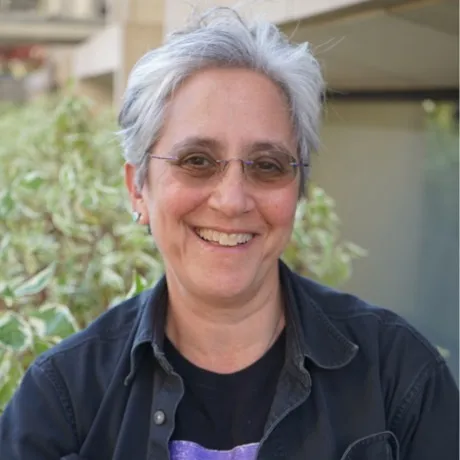
Because of my work with the Spirit of 1848 Caucus, which we founded in the mid-1990s around themes of social justice and public health, I was already part of a broader network of people working at the intersection of health and social justice. Spirit of 1848 was set up as a place to bring together people committed to health justice, critical thinking, research, and public health practice. It grew out of the work of National Health Commission of the National Rainbow Coalition, coalesced in 1994, and since 1997 has been active within and outside the American Public Health Association (APHA) as a Caucus in official relations with APHA.
When HIP came on the scene, it was clear that it would become a gathering place for people who considered themselves public health activists in one way or another — whether based in government, community organizations, advocacy, or academia. From the start, it felt like our organizations were complementary. There is so much work that needs to be done, and we were each addressing aspects of that work in different ways. My orientation was also shaped by my experiences with the National Rainbow Coalition and its Health Commission during Jesse Jackson's presidential campaigns.
That relationship became more formal during the first Trump administration, when HIP helped mobilize an emergency public health response. That period led to deeper engagement between Spirit of 1848 and HIP, including the annual APHA social gathering that Spirit of 1848, HIP, and Public Health Awakened have organized together since 2019. It’s become an important space for community-building and connection.
I would say that it's not so much that HIP changed how I personally think about things, but rather that they gave a stronger impetus to the shared work. It's important to find people you have common ground with and then build out to reach people who don't necessarily see things the same way. With HIP, it was that connection to people who are similarly situated in the larger fight for health justice, where we have different foci for our work, but understand why they come together.
I am, among other things, a researcher and a teacher, but I've also always worked with people who are in health departments, and the ways that HIP was working with people in health departments to help broaden their horizons as to what they could do and reinvigorate their work with social justice and health justice at the core was really important.
I also appreciated HIP's work around different forms of community engagement without a narrow definition of community. And the fact that HIP was willing to take on issues that had not gotten a lot of attention in public health, including abolition. I was doing work, as a social epidemiologist, on empirically analyzing police violence, police killings in particular, and it was important to see HIP helping build out that area of work and wanting to be supportive of it.
I know, particularly through Public Health Awakened, that HIP has created a space for people who want to do work for health justice in ways that their employing institutions may not always support. They have created connections, whether people are in health departments, government agencies, community-based organizations, academia, or other parts of civil society, and built a sense of network. The fact that they have chapters in different parts of the country gives people a sense that they're not alone in figuring out these struggles.
For me, that reflects a kind of Rainbow Coalition orientation to the work: bringing different people together while understanding the specificity of particular issues. For any issue, you need specific knowledge, but you also need to understand what ties those issues together. HIP has been clear about the political economy of health and about getting involved in ways that can move the needle. What HIP does in that context is recognize that health is not always the most important issue above all else, but it is woven into everything. Bringing a health lens into broader struggles is critical.
HIP has played an important role in helping connect health to labor campaigns, education campaigns, abolition campaigns, environmental campaigns, housing campaigns — you name it. One of the important parts of HIP's work is keeping that connection visible, because it keeps us grounded in the lived realities of being both biological and social creatures, and that shows up in our health and in health inequities.
I hope for continued dedication, growth, connection, and strengthening the kinds of coalitions that are necessary to create a more just and equitable society. That work has to be done with a frame that includes both what's happening within the United States and the U.S. role in the world. It's not an isolationist stance, but an understanding that there's a lot of work to do at home, and that work is connected to global impacts.
I think it is critical to remember that there are more of us than them. The struggle is ultimately about who sets the rules of the game and whether those rules work for equity, sustainability, and a world in which all can thrive versus only a few.
Nashira Baril, MPH
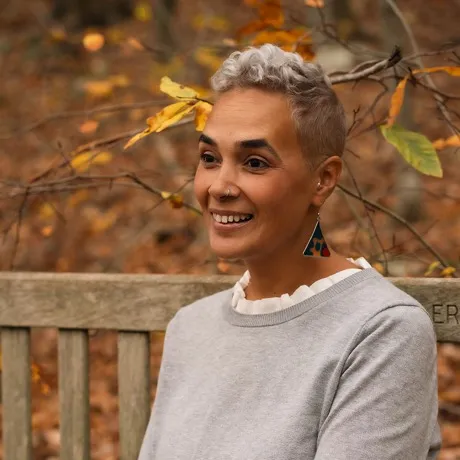
I was a fellow in HIP's first cohort of public health equity leaders in 2014. At the time, I was burnt out from leading the health equity office at the city health department and was so honored to be nominated to, and then held in, this circle of leaders during a really transformative time in my career.
Gathered around a massive fire pit at a retreat center in the woods of Massachusetts, public health leaders from Vermont to California to Minnesota to Washington meditated on their purpose and made commitments to themselves and to each other to feel, deal, and heal.
I have experienced as a fellow — and then witnessed as I led the Health Equity Awakened fellowship program — HIP's willingness to co-create a container for public health leaders, specifically government employees, to push themselves through discomfort as they wrestle with the truth that our public health systems uphold structural inequity and power imbalances. I have seen seasoned leaders cry, laugh, and deepen relationships as they transform themselves and work together to test strategies for changing the systems in which they work. HIP has nurtured a national network of public health leaders with a shared and sharp analysis of power and equity, who know how to organize inside institutions and create sincere, conspiring relationships with the community.
I hope for HIP to keep taking risks (in creating narratives, with its own funding, and in partnerships) to continue to be a north star for the field of public health, and particularly for those working in government.
Renée Canady
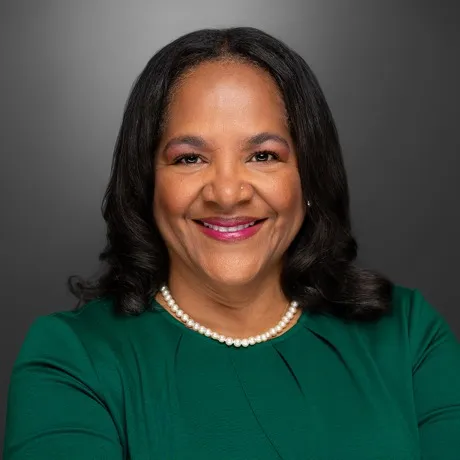
I was introduced to HIP through a collaborative initiative between community organizers and governmental public health. The "what" of the work was important, but I was drawn by the "how" and the "why" that HIP brought to the table. It was a "heart to heart" and "deep to deep" moment when I connected with the HIP leaders. I realized very quickly that Jonathan Heller and Lilli Farhang were my people! Their commitment to the humanity of folk, and their soft cynicism toward systems supposedly established to serve, matched my own sentiments. I knew change would be coming at the hand of HIP, and I was thrilled to be an extension of their reach!
The two most meaningful collaborations were our partnership on The Power to Thrive (the community organizer/public health practitioner partnership referenced above), and the Health Equity Awakened Leadership program, which deepened my clarity and commitment to the impact of power. Though I have always seen relationships as my "superpower," tapping more deeply into how power helped or hindered relationships was a direct result of my engagement with HIP leaders. How do you share power, abrogate power, elevate the impact of power, leverage power, and more? Effectively recognizing the power of self and the power of others not only deepens relationships but expedites their impact. It is a framework that has continued to influence my lens and philosophies as a leader.
HIP has elevated a culture of truth and candor. Rather than being politically correct, they have positioned us to be productively outraged, pushing pretense out of the room. HIP has given us the vocabulary and the courage to use our words in ways to advance equitable outcomes for all.
I hope that HIP will stay the course and widen the lanes! What it took for us to make progress is also needed for us to hold on to, and to advance that progress. The social lessons of the last year have shown us that opposition foments in silent spaces — and so this work must be undertaken with audacity and clarity. As they have done, HIP must continue to be the bull horn that announces the truths we often do not notice, or choose to ignore. Steps backward are still movements that offer strategic insights. HIP is powerfully good at learning from lessons (wanted and unwanted!). The field vitally needs HIP's skill at articulating the root of the problem and driving collective solutions. I look forward to benefiting from the fruits of HIP's labor as we look back in 20 years and celebrate the change, improvement, and mutual advantages they have birthed.
Sandra Witt, DrPH

I was fortunate to have met Jonathan Heller when he was considering starting HIP as an organization to further the development and use of health impact assessments (HIAs) to center health and equity in policy decision making.
At that time — over 20 years ago, I was working at a local health department where we were clear about the role of the social determinants of health on community health and health equity, but we didn’t yet have the tools and methodologies to capture those impacts in an easily understandable way (health impact pathways and frameworks). The founding of HIP, an organization dedicated to developing and refining health impact assessment practice and building the capacity of public health organizations to focus on equity in their work, filled a huge gap in the field and laid out some critical building blocks for transformative change in public health practice to advance health equity.
Over the past decades of my work within a local public health department and within a statewide health foundation, HIP’s work has sharpened my understanding and vision of what transformative public health equity practice looks like, including health impacts analysis, power-sharing with those most impacted by inequities, and the long-term work of building the capacity of government to center health and racial equity.
In the early days, HIP’s research expertise on health impacts as well as their collaborative approach to conducting HIAs in partnership with community groups was instrumental in helping the local public health department establish a Health in All Policies (HiAP) program which has become an important component of a public health equity practice. HIP’s bold vision of building the capacity of governmental health practitioners across the country in health equity practice — through their Health Equity Awakened leadership program as one example — became even more important during the pandemic, the uprisings for racial justice, and the current anti-immigrant assaults.
The role of these programs as a place of learning, problem-solving, support and healing, and as part of a transformative health equity practice to dismantle structural racism and confront the current political and cultural backlash is even more important now than I first realized.
HIP has been a critical partner in moving public health to advance health and racial equity by becoming explicit in addressing structural racism and White supremacy as root causes of health inequities. The HIA framework that demonstrated health impact pathways were important in building understanding and shifting the narrative about what creates health. HIP has helped normalize that a health equity practice understands the role of power and the importance of power-sharing with community partners.
HIP’s Healthy Equity Guide, and Power-Building Partnerships for Health, with examples of public health departments working with community based organizing partners, demonstrate what is possible, sometimes against all odds, to advance community health. Some 20-plus years ago the cutting edge of governmental public health work was working with different sectors to address the social determinants of health. Now, normalizing power-building and power-sharing directly with community organizing groups is recognized as fundamental to advancing health equity.
My hope is that HIP continues to develop, deepen, and refine our understanding of what health equity practice looks like and what it takes to institutionalize this practice — and that they continue to show up with humility and love for all humanity, and a keen eye toward power-sharing, collaboration, and learning and reflecting along the way. Given the challenges ahead, it will be even more important to create nurturing leadership spaces for governmental public health equity practitioners, as well as to build the capacity of movement organizations to work collaboratively and shift resources to address root causes and advance health and racial justice for all.
Sarah de Guia

When I was working at California Pan-Ethnic Health Network (CPEHN), as Director of Government Affairs, I reached out to HIP for technical assistance on a bill we were sponsoring at the state level. While I didn't have a direct relationship with HIP staff at the time, the director and other CPEHN staff members did. The bill would have required the state's Office of Planning and Research to include a health element in the general plan guidance to local governments. Given HIP's work on health impact assessments, I requested their support on language and framing. HIP staff were friendly, easy to work with, and very supportive — even though they didn't know me yet. It always left such a positive impression on me that they were willing to spend time and help.
As a HIP Board member, I have had the privilege to be engaged in the organization's strategic planning processes and early campaign ideas. Through the board conversations, staff presentations, partner discussions, and reading materials, I have deepened my understanding of the broader ecosystem approach needed for health, justice, and power-building. This understanding has helped me place my own beliefs and understanding within this ecosystem, my organization's role and possible contributions, as well as HIP's. It has made me feel like I belong in this broader movement, that my leadership and contributions are important and valued, and has brought me in closer support and relationship with HIP's leaders, staff and board members. I am so grateful to be on this journey with the organization.
I believe that HIP has made advocacy, power-building, and campaign work more accessible and acceptable for the public health field. Before HIP's work, I think public health wasn't always as open to, or embracing of, mobilization, campaigns, and advocacy; however, by building a supportive infrastructure and safe space to be engaged, while also offering training and capacity building for leaders, government staff, and organizers, it feels more integrated and central to our work.
As we face current and impending challenges, I hope that HIP continues to offer a positive vision for change and collective courage to work towards that vision for each other and our partners. I see HIP as offering a beacon of light no matter what type of darkness we will face. HIP can offer the support for healing, love, and joy and space for mourning and celebration through our journey.
Shireen Malekafzali Taidi

I interned at the San Francisco Department of Public Health from 2003 to 2007, working under Lili Farhang and Rajiv Bhatia on the Health, Equity, and Sustainability Team. I worked on some of Rajiv’s early efforts to bring a health and equity lens into San Francisco’s policy decisions. I learned of Rajiv’s growing relationship and later partnership with now HIP founder Jonathan Heller to create an organization focused on Rajiv’s work to bring Health Impact Assessments into policy decisions that impacted the social determinants of health. Rajiv was a founding Board member of HIP with Jonathan as the Executive Director, and they both recruited Lili to join as a Co-Director a few years later.
My internship instilled in me an expansive and innovative public health practice that had equity embedded in its DNA. I loved that HIP was taking values, skills, and practice to other parts of the nation. This was the sprout that grew into a liberated practice of bringing the power of public health to social movements in deep partnership with local community leaders.
I was inspired by the creativity of HIP and wrote a paper with HIP in 2013 on “Promoting Equity through the Practice of Health Impact Assessments” as the practice of HIAs was growing but, at times, growing away from its roots in equity. I also served as a mentor for HIPs Health Equity Awakened Leadership program for several years between 2017 and 2022. I joined the HIP Board in 2016 and chaired the Board from 2018 to early 2026.
For me, HIP helped me to home in on the necessity and value of the head and heart approach. When I first heard HIP staff talking about this, it felt like I was recollecting something I’ve known and felt but didn’t have words for. Hearing it in the context of work gave me permission to embed the approach into the framework and values of my day-to-day work, bringing together a lot of learnings, feelings, and knowing.
HIP has created a bold and unabashed left lane for the field of public health, always pushing the field to be more progressive in its thinking and bolder in its practice to stretch out of its comfort zone in response to new data, information, and community needs. HIP has challenged and pulled the field to reckon with the status quo of practice, and to adjust and transform to meet the needs of today. HIP itself is always providing examples of how to take risks to put theory into practice in disciplined and practical ways in order to evolve public health practice and advance justice and power. It demonstrates what is possible for the field and brings the field along.
I hope HIP’s values and practice will be more mainstream and in demand, creating a stronger movement that transforms public health to be more courageous to wield its power to address the social, economic, and political factors that determine health outcomes, and more specifically health inequities. Equity is baseline and justice is within reach.
Sylvia Kamau-Small

Adams County Health Department was erected in January 2023 as a result of the dissolution of a three-county Health Department called the Tri County Health Department. Tri County Health Department was working with HIP's Capacity Building team to begin their formal Health Equity work. One of the Tri County staff that worked with HIP was a part of the founding steering committee that developed a cross-departmental Health Equity Council (the We The People Council) a year into the Adams County Health Department's launch. This colleague was instrumental in advocating for continued work with HIP to provide technical assistance and facilitation for the Health Equity Council. The collaboration with HIP to build the equity capacity of the We the People Council formally kicked off in the summer of 2024 and has continued to date.
HIP’s leadership and expertise in capacity building around health equity has made a tremendous impact for the We the People Council, and for me personally. This was felt so poignantly over the last year and a half with the federal administration shift. Like other health departments and local governments, we've contemplated whether freezing or dismantling DEI and equity work would be necessary to preserve our programming. The HIP Capacity Building Team supported the We the People Council in our recalibration to respond to the federal administration's shift, which helped enable us to continue to build our organization’s health equity capacity.
One tangible example of this support and role-modeling of equity analysis was the review that the HIP Capacity Building Team conducted on a ‘censored language’ glossary that health department leadership implemented. HIP’s guidance was to apply an equity lens to the interpretation of the censored terms to drill down to the root intent — and to focus on that. Whatever term we need to use, if we understand the core pursuit of advancing equity, we can remain true to our mission and values. This reaffirmed our direction, and commitment to the work.
HIP has contributed to the movement of the public health sector to more meaningfully pursue systems change through championing policy and legislation. In the past, this was seen as beyond the scope of public health. HIP has supported the bridging of methods and collaboration between community organizing, grassroots research, social justice, and public health to expand the capacity of communities to transform inequitable systems. This is visible along the issue areas that HIP has prioritized strategically, like housing and environmental justice, civic engagement, and abolition.
We've watched as tremendous progress in pursuit of equity and justice has been systematically rolled back over the past few years. I hope that HIP can continue to lead the public health landscape in regaining the ground that we've most recently lost. I hope that HIP can continue to provide support so that the future of public health is equity and justice. The current state of public health in so many spaces still engages with equity and justice as a supplement, an afterthought, or the responsibility of an individual or small group. I hope for public health that it is one and the same as equity and justice. I firmly believe that HIP is a big part of that recipe.
Tomás Rivera

I first came into relationship with HIP around 2014 through a Health Impact Assessment (HIA) focused on Santa Fe. At the time, Chainbreaker was expanding from transit-focused community organizing into place-based organizing around housing and neighborhood conditions. The HIA helped inform that transition and became an important organizing and education tool for our work.
The partnership came through the Santa Fe Community Foundation and the Health Equity Partnership, which connected us with HIP. The report helped us better understand the level of need in the neighborhoods where we were organizing, identify priorities for our work, and sharpen our campaigns around equitable resource allocation.
What made the partnership so valuable was that the report was not simply a research product. We used it to organize residents, educate the community, and hold elected officials accountable. The maps showing patterns of segregation and disinvestment were particularly powerful in helping people understand the inequities they were experiencing and demand change.
That first collaboration led to many others, including work around community land trusts, housing justice, and tenant organizing during the COVID-19 pandemic. Throughout those projects, HIP consistently approached the work as a true partner and helped produce research that communities could use to build power.
That first Health Impact Assessment was transformative for our organization. It helped us articulate something we still say today: the data gives the facts, but the people tell the truth.
The report brought those two things together. It wasn't the first time we had encountered information about inequity, but it was the first time we saw data used so strategically and intentionally in service of community organizing. The work was rooted in the neighborhood, connected to community priorities, and designed to advance concrete organizing goals. It changed how we thought about using research as a tool for building power.
HIP helped advance an understanding of health that centers the social determinants of health and recognizes that racial and economic justice are inseparable from community health.
When we first began organizing around these issues, much of the conversation focused on health care services and prevention. Those are important, but HIP helped deepen the analysis by highlighting how people's neighborhoods, housing conditions, and access to resources shape health outcomes and life expectancy.
That framework strengthened our own organizing and helped shift the conversation locally in Santa Fe. It reinforced the idea that there is no such thing as a healthy community without racial and economic justice.
We are facing an unprecedented period of attacks on communities, institutions, and movements for justice. If we are going to survive and grow through this moment, it will depend on real and meaningful relationships, and HIP has consistently modeled what that looks like.
I hope HIP continues to build genuine partnerships, remain strategic, and support communities in turning information into action. The data matters, but the most important work is how that information is presented, how relationships are built around it, and how people use it to demand change.
I believe we will get through this period. My hope is that organizations like HIP help us build enough power not only to survive, but to rebuild what has been damaged with a stronger vision for truly healthy communities that include everyone.